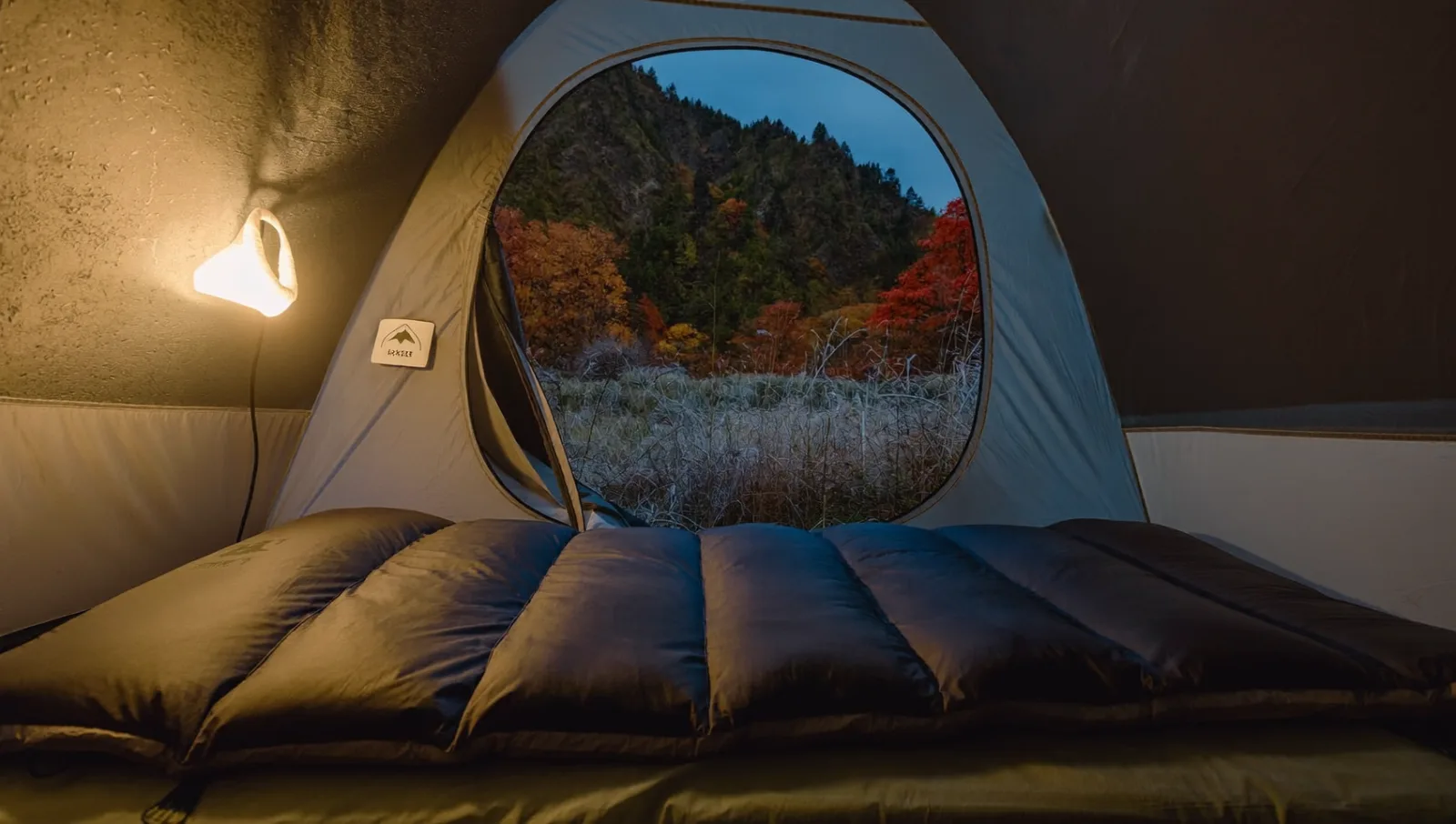
Ask a new camper why they were cold and they will usually blame the sleeping bag. The bag is rarely the whole story. Staying warm outdoors is a system in which three things — what you sleep in, what you sleep on, and how you manage moisture — either cooperate or fail together. Get the system right for Japan's specific conditions and a three-season kit will carry you comfortably from spring through late autumn across most of the country.
This is a practical guide to that system: the numbers that actually predict warmth, the Japan-specific twist of humidity, and the real cost of buying versus renting.
Read sleeping-bag ratings honestly
Sleeping bags sold to a European standard usually carry two numbers you can trust more than the marketing name: the comfort rating and the limit rating. The comfort rating is roughly the lowest temperature at which an average person will sleep warm and relaxed. The limit rating is where you will survive the night curled up but not comfortable. Buy to the comfort number, not the limit — and not the aspirational 'season' label on the stuff sack.
For a three-season Japan kit, the question is: how cold do the nights actually get where and when you camp? Lowland spring and autumn nights are mild, but the mountains and highlands you camp in to escape summer heat can drop toward single digits Celsius even in August, and clear autumn nights at elevation get genuinely cold. A comfort rating in the low single digits Celsius is a sensible, versatile target for most three-season use, with clothing to extend it colder. Match the bag to your coldest planned night, not your average one.
The ground steals more heat than the air
Here is the point most beginners miss: on a cold night you lose more heat downward into the ground than outward into the air. The best sleeping bag in the world cannot fix a thin pad, because your body weight crushes the insulation beneath you flat, and the cold ground draws heat straight out of you all night.
The number that governs this is the pad's R-value — its resistance to heat flow. Higher is warmer. A thin foam pad or an uninsulated air mat is fine on a warm summer night and miserable in autumn. For three-season use you want a pad with a genuine insulating R-value, not just cushioning. This single upgrade fixes more 'my bag isn't warm enough' complaints than buying a warmer bag would. Think of the pad and bag as one purchase decision, budgeted together.
Condensation: Japan's hidden warmth thief
Japan is humid, and humidity is where sleep systems quietly fail. Warm, moist air from your body and breath meets the cold inner surface of the tent and condenses into water. That water can drip back onto your bag, and — worse for warmth — down insulation that absorbs moisture loses much of its loft and therefore much of its warmth. A damp down bag on the second night can be noticeably colder than it was on the first.
Managing this is a skill, not a purchase. Ventilate the tent even when it is cold — cracking vents lets moist air escape rather than condensing inside. Do not seal yourself in. Keep the bag off the wet tent wall. Air and dry the bag whenever the sun appears. For very humid or multi-day trips, synthetic insulation, which keeps more of its warmth when damp, is a legitimate choice over down despite the weight penalty. In Japan, moisture management is not a footnote to warmth — it is part of it.
Layer your clothing into the system
The cheapest way to extend a sleep system's range is the clothing you already carry. Dry base layers kept only for sleeping, a warm hat (you lose real heat from an uncovered head), and dry socks can add several degrees of comfort for almost no money or weight. The rule is dry: never sleep in the layers you sweated in during the day, because damp clothing cools you all night. A modest bag plus disciplined sleep clothing often outperforms an expensive bag used carelessly.
Buy versus rent: the honest yen math
For a traveller, the buy-or-rent decision is real, and the answer depends on how many nights you will actually camp. A capable three-season bag and an insulated pad are a meaningful purchase, and to that you must add the bulk and weight of carrying them through a trip that also involves trains, cities, and flights home.
Rental changes the equation. Many Japanese campgrounds and outdoor shops rent sleeping bags and pads, and some 'hand-empty' (tebura) campsites supply a full kit so you arrive with nothing. For a traveller doing a small number of nights, renting is often cheaper than buying once you count the gear you would otherwise fly home with unused — and it removes the transport burden entirely. The break-even is genuinely about frequency: if you will camp many nights over a long stay or repeated trips, buying wins; for a handful of nights on one visit, renting usually does. Do the arithmetic for your actual trip rather than defaulting to ownership.
Assemble it as one decision
The mistake is buying a sleeping bag in isolation and hoping. Instead, decide the whole system together: a bag rated (by comfort) to your coldest planned night; a pad with a real insulating R-value to match; a moisture plan of ventilation and drying for Japan's humidity; and dry sleep clothing to extend the range for free. Then choose buy or rent by counting your actual nights.
Do that and cold nights stop being a lottery. You will sleep warm from spring to late autumn across most of Japan — and sleeping well is what makes the mornings, and the whole trip, worth it. Check current overnight lows and each site's elevation before you travel, and confirm rental availability in advance if you plan to rely on it.