
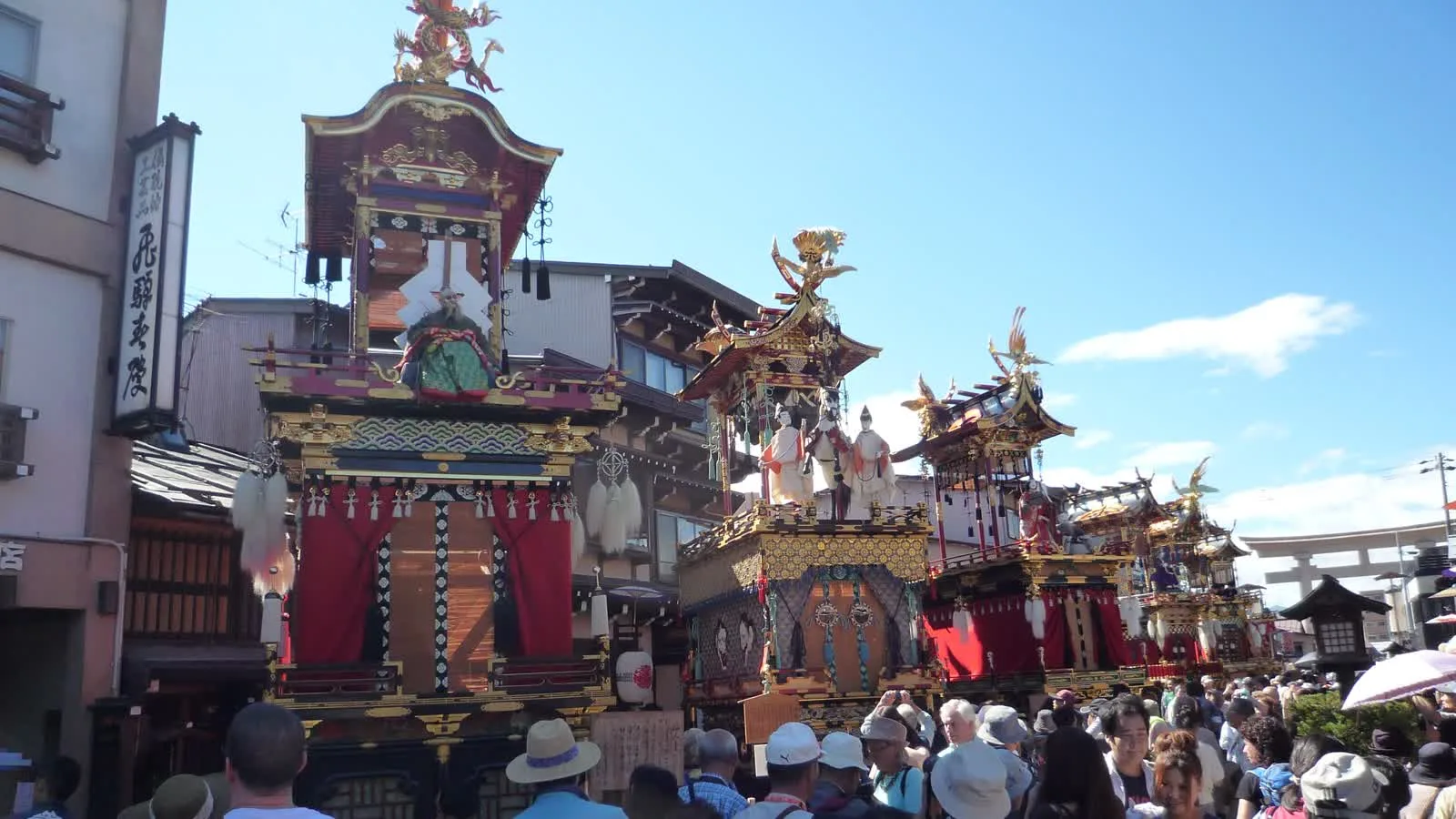
The Takayama Autumn Festival (Takayama Matsuri) is held every October in the old castle town of Takayama, deep in the mountains of Gifu. Its ornate, centuries-old floats — yatai — are counted among the finest in Japan, and the evening procession, when the floats are hung with lanterns and pulled slowly through the historic streets, is genuinely unforgettable. It is also, for a camper, a logistics problem worth solving in advance, because Takayama is small, remote, and completely full on festival days.
This guide treats the festival as a plan, not just a spectacle: where to sleep, how to move, and how to stand in the right place at the right time.

What actually happens, and when
Understanding the schedule is the whole battle. The festival runs across two days in mid-October, and the parts a visitor cares about are spread through them. In daylight the yatai are displayed in the streets and a procession winds through town; some years feature the marionette performances (karakuri) that the festival is famous for. The moment most people come for is the evening float procession, when the lantern-lit yatai move through the dark — this is the emotional peak and the hardest part to reach and leave.
Exact times shift year to year and the whole event is weather-dependent (rain can cancel the float appearances entirely), so build your plan around the published schedule for the specific year and always have a rain contingency. Never assume last year's times.
Where to base: not in Takayama
Accommodation inside Takayama books out months ahead and at a premium during the festival, which is exactly why arriving self-contained is an advantage — if you plan the distance. Campsites and car-stay options exist in the wider Hida region and along the approaches from the Japanese Alps, but few are within walking distance of the old town.
The realistic model is: base at a campsite or michi-no-eki within a reasonable drive, then solve the last leg into the centre separately. Choose your base by how you intend to attend the night procession — because that evening return is the crux of the whole trip. A site 40 minutes away is fine if you have a clear way back after dark; it is a trap if you do not.
Parking is the real constraint
Takayama's central streets close and its limited parking fills early on festival days. Do not plan to drive into the centre and find a spot near the floats; that plan fails. The workable approaches are to park at a designated festival or park-and-ride lot on the edge of town and walk in, or to leave your vehicle at your base entirely and reach the centre another way.
Whichever you choose, arrive far earlier than feels necessary. The gap between 'comfortably early' and 'circling for an hour in gridlock' is often just thirty minutes on a festival morning. Confirm the current year's official parking and shuttle arrangements before you go, as they change.
The night procession: getting in, and getting out
The evening float procession is the reason to come and the hardest logistics of the trip, because everyone leaves at once, in the dark, in a small town, after the last convenient transport windows. Plan your exit before you enter.
If you are driving back to a base, expect slow, heavy traffic leaving town and factor it in; being parked on the correct side of town for your route home saves a great deal of frustration. If you are relying on any train or bus, know the last departure precisely and treat it as a hard deadline — missing it in the mountains is a cold night, not an inconvenience. The campers who enjoy the evening most are the ones who decided, hours earlier, exactly how and when they would leave.

Etiquette at a living cultural treasure
The yatai are irreplaceable cultural property, pulled and maintained by local neighbourhood associations as they have been for generations. This is not a show staged for tourists; it is a community's own festival that visitors are privileged to watch. Keep out of the path of the floats and their crews, follow the instructions of marshals without argument, do not touch the yatai, and be thoughtful with photography — especially flash near the lanterns and performers. Standing quietly in a good spot you reached early is both the most rewarding and the most respectful way to experience it.
Make it a mountain trip, not just a festival run
Because getting to Takayama is an effort, it rewards being built into a longer autumn trip rather than a single dash. Mid-October is prime foliage season in the surrounding Hida mountains and the northern Japanese Alps, and the same elevation-and-timing logic that governs autumn colour applies here: base high early, come down for the festival, and let the colour and the culture reinforce each other. A festival is a fixed point; the days around it are yours to design.
The short version
Treat Takayama as a logistics exercise and it becomes one of the most rewarding festivals in Japan to reach as a camper. Base outside town within a drive whose evening return you have actually planned; never try to park by the floats; know your exact way home from the night procession before you go in; and watch respectfully, from a spot you earned by arriving early. Confirm the specific year's schedule, parking, and transport before you travel — the festival is weather-dependent and the arrangements change annually.